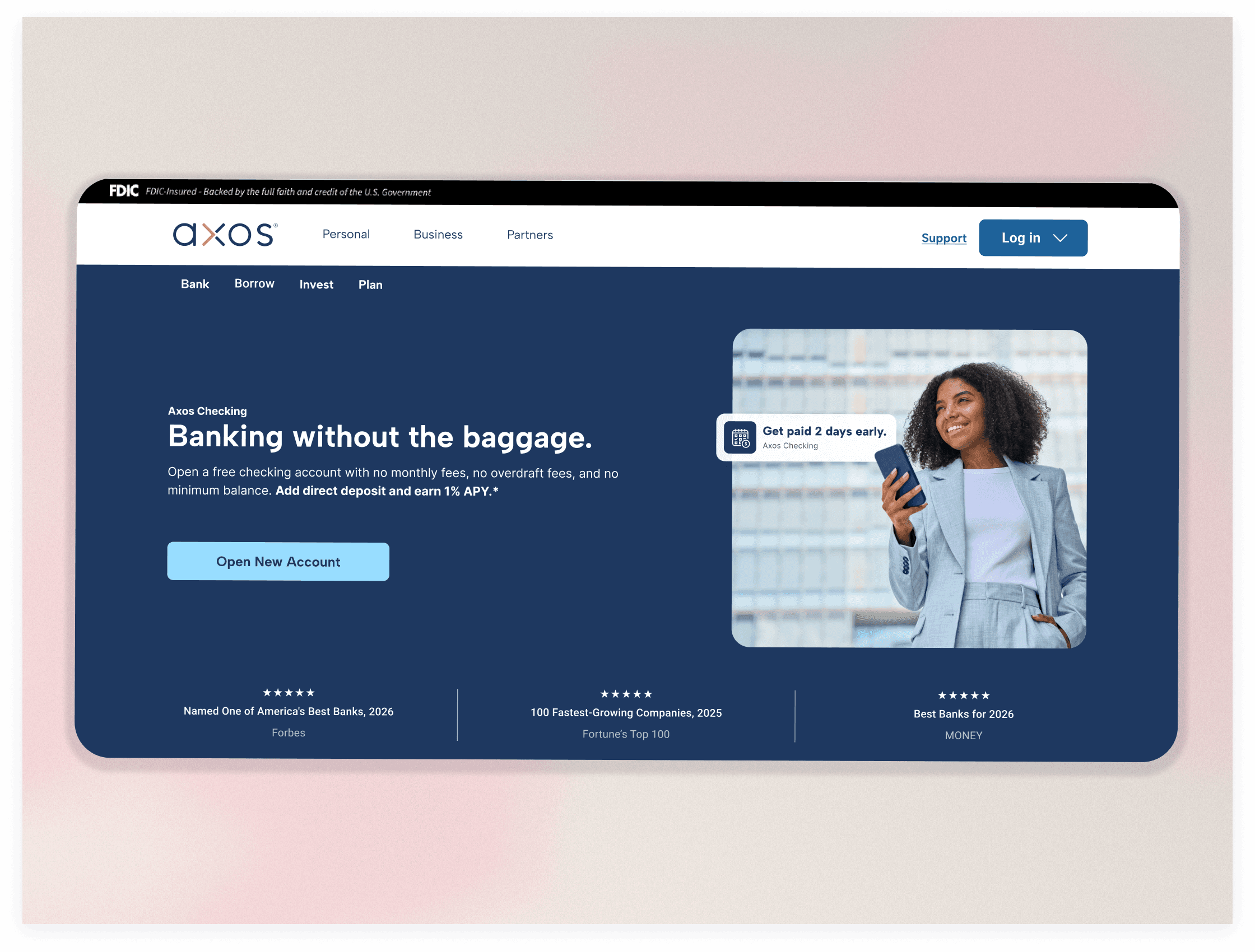
Refer a Friend
2025
Scaling a referral program into a growth platform
Rebuilding a referral program into a flywheel around how people actually refer.

Overview
Turning a referral program into a real acquisition channel.
Referral programs fail for a predictable reason: most of them stop at the invite and never keep the loop going after that first ask. I rebuilt Axos’s from a single product page into a channel with its own funnel, its own timing, and its own economics, one that other business lines now use as the template for launching their own. That work is what grew the program 52x.
Problem
A referral program nobody was treating as one.
When I inherited this space, refer a friend was a single webpage tied to one product. No presence anywhere else on the site, no incentive structure designed to compete, and nothing driving it beyond whatever traffic happened to find that page. It generated about $28K a month, a drop in the bucket compared to paid acquisition, and nobody was treating it as a real growth channel.
Research
The gap wasn't advocates, it was what happened after the referral.
I looked at how we stacked up against banks people actually compare us to, Chase, Ally, SoFi, Chime, and found two clear gaps. First, our referral offer had an annual cap, while none of the strongest competitor programs did, which meant our best advocates, the ones with the biggest networks, hit a ceiling and stopped. Second, using benchmark data from our referral platform, I found only 20% of referred friends who started the process actually completed it and funded an account, against a 60% average for comparable programs. That gap, not a lack of people referring, was the single biggest opportunity in the funnel.
Approach
Rebuilding around structure, timing, and placement.
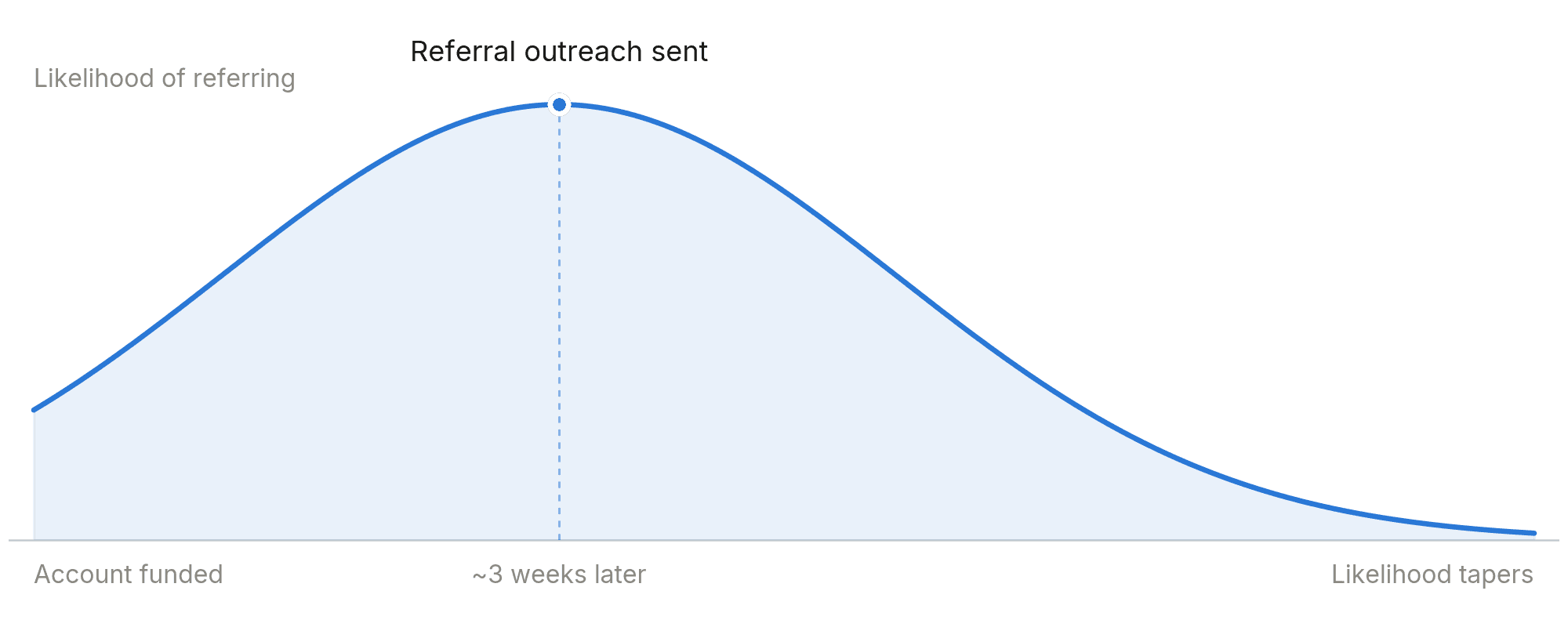
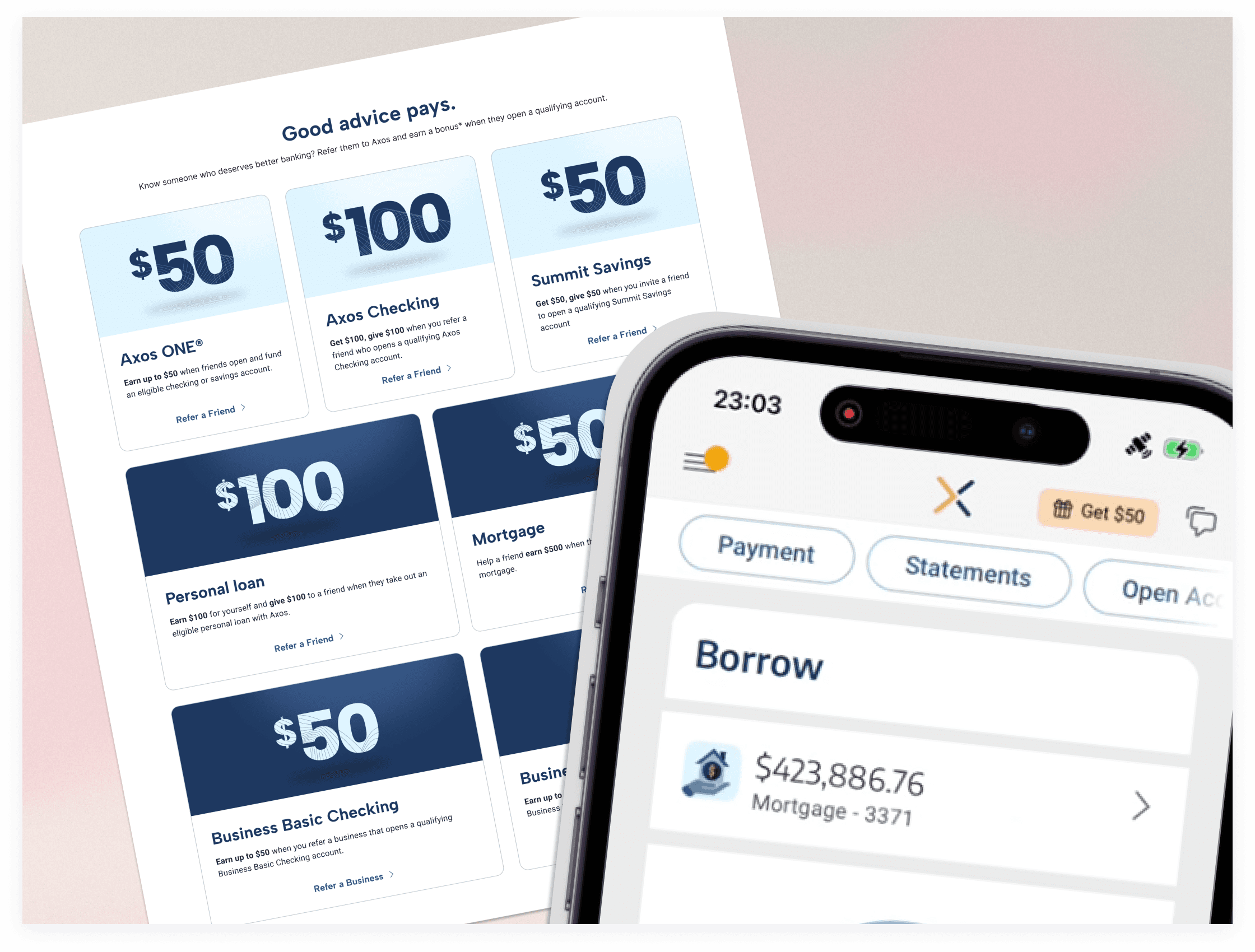
I proposed rebuilding the program around what that research pointed to. I removed the referral cap and moved to a $50/$50 structure so our most active advocates had a real reason to keep referring instead of stopping once they hit a limit. I also looked at when customers were actually most likely to refer a friend, and found it wasn't right after signup, it was around 21 days after their account was funded, once they'd had a real experience with the product to vouch for. I built in the outreach to reach people at relevant moments instead of a generic fixed schedule, along with embedding it into communications they would already be receiving at that point in their lifecycle.
Finally, working with our mobile app teams, we worked on adding a referral button directly onto the site and app, everywhere, not just one buried page, so customers could act on that impulse the moment they had it. The program expanded, which let me extend it across multiple deposit products. The groundwork I'd laid also helped with additional verticals to raise their own referral programs.
Results
Referral became a channel the rest of the bank builds on.
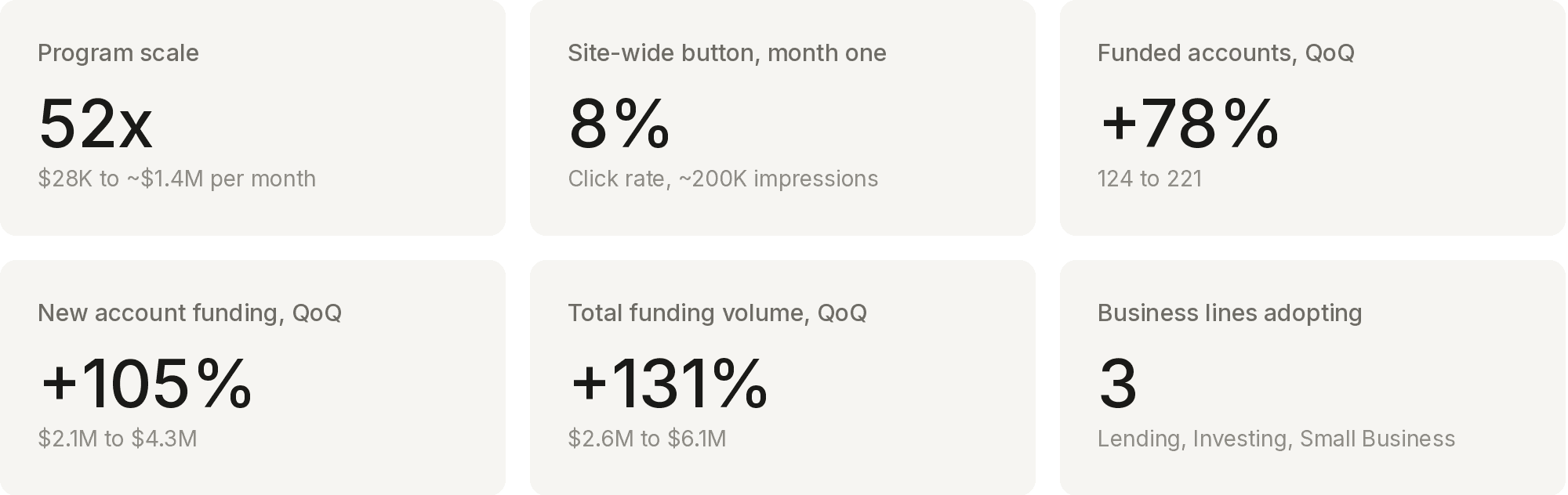
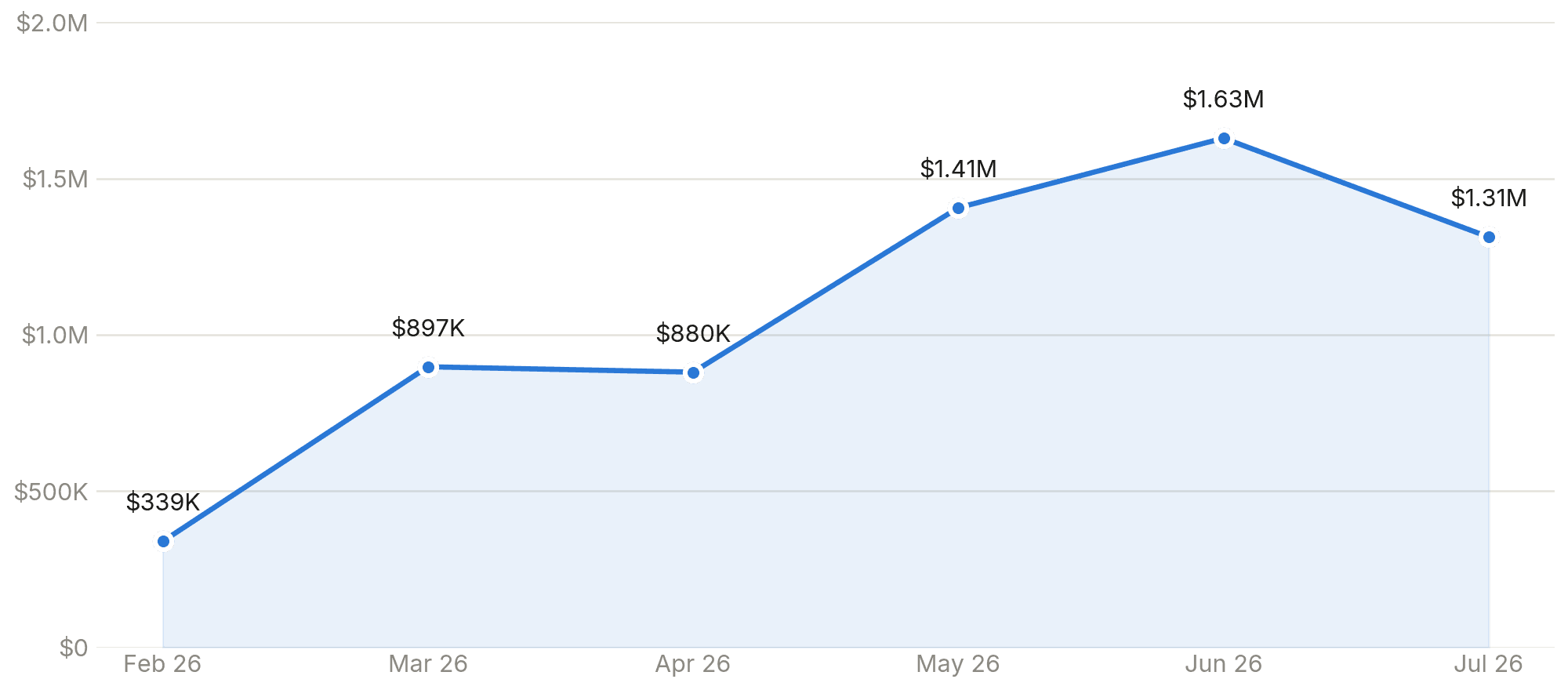
The program grew from $28K to roughly $1.4M a month in new account funding, a 52x increase. The site-wide referral button alone drove an 8% click rate in its first month live, against nearly 200,000 impressions, meaning referral went from something customers had to seek out to something they saw and acted on directly. The most recent quarter shows the program is still accelerating: funded accounts grew 78%, new account funding grew 105%, and total funding volume tied to referrals grew 131% quarter over quarter. The model has since been adopted by three other business lines, Lending, Investing, and Small Business, each launching their own version of the same structure.
What's Next
Closing the gap between referred and funded.
The biggest remaining opportunity is that qualification gap, still 20% against the 60% benchmark. I'm currently building reminder outreach for friends who start but don't finish the process, testing a simpler, lower-friction version of qualification, and moving our sign-up pages onto our own platform to remove technical friction that's likely costing us conversions today.