Axos Checking
2026
Building the GTM engine for a new deposit product
Positioning a new product around what customers actually needed in a saturated market.
Overview
Testing appetite for a standalone checking product.
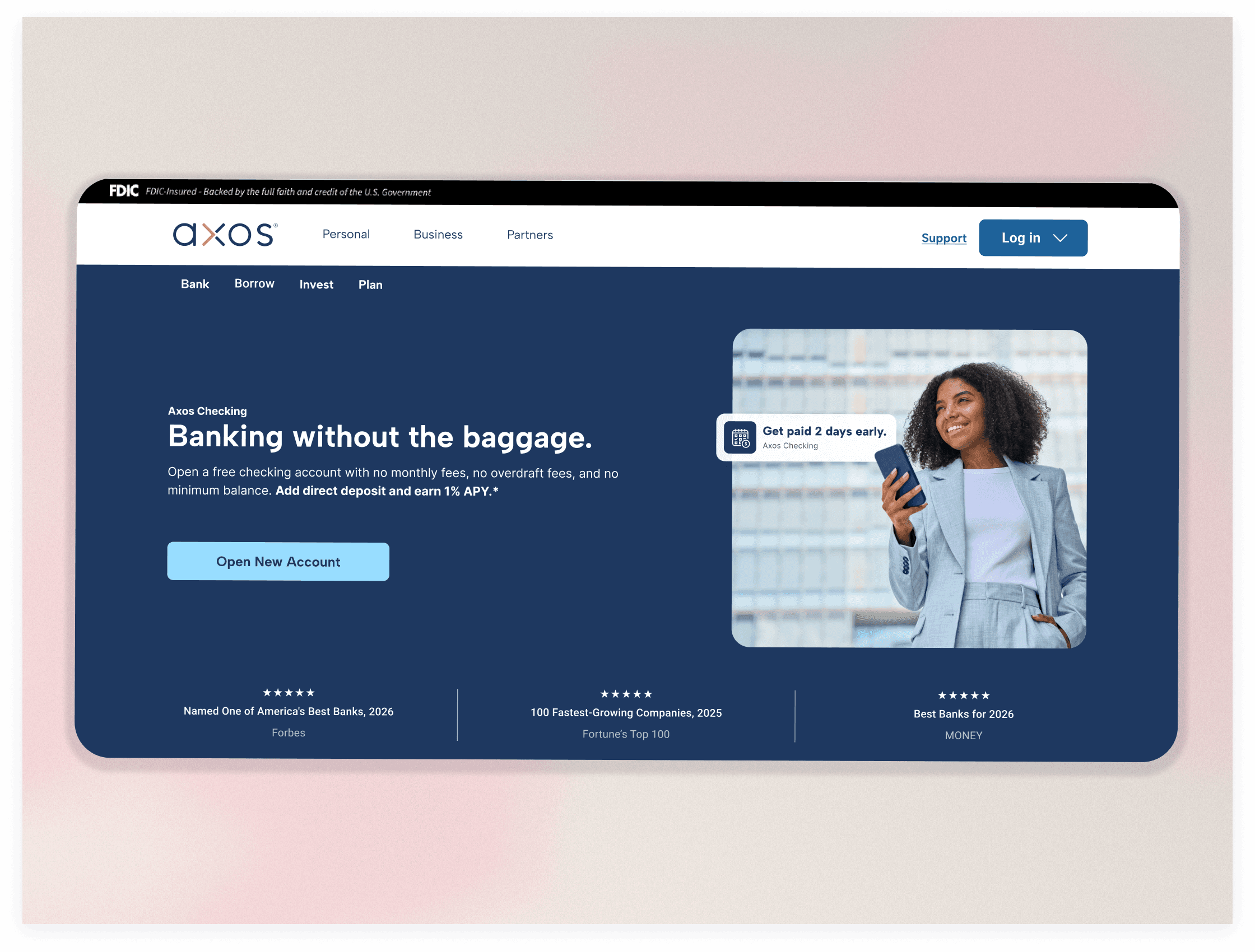
Launching a second product inside an existing customer base raises a specific question: will people actually want the new thing, or just keep using what they already have. Axos Checking was built to answer that, a no-fee account testing market appetite while opening a lower-barrier entry point into the broader ecosystem. As Senior Marketing Strategist, I led go-to-market strategy for the launch, from research through the web and in-app journeys that took it to market.
The Impact
The GTM strategy centered on proving demand from two directions at once: new customers finding the account on their own, and existing depositors choosing it as a second product. Research shaped the messaging, journeys, and in-app placements from the ground up, and the launch delivered on both fronts.
Problem
A higher-friction front door needed an easier alternative.
Axos already had a high-yield savings product, but it came with real barriers: tiers, requirements, complexity that made it a hard first product for a new customer. The question behind this launch was whether there was actual appetite for another checking product, or if it would just cannibalize what we already had. My bet was that a low-barrier account, no fees, no gatekeeping, could do something the savings product couldn't: be the easy first yes that gets someone into the Axos ecosystem in the first place.
Research
What actually gets someone to switch banks.
I ran user testing with 30 participants to find out what actually makes people consider switching checking accounts. I don't trust stated preference on its own, people will say they want the premium thing, so I built a forced ranking into the testing to see what they'd actually choose when they couldn't hedge. Fee elimination and cashback won by a wide margin. Things that felt more "premium," AI insights, lounge access, barely registered once people had to pick. That told me something specific: don't lead with the rate, lead with the relief. So early in the build, I tested messaging both ways, rate-first versus fees-first, and fees-first won on engagement. APY became the reward you unlock with direct deposit, not the headline.

Approach
Building the journey around what people actually chose.
Laying the groundwork
I owned the GTM build end to end, and treated it as one connected funnel rather than a single onboarding flow: get someone to the site, get them to apply, and get them all the way to funded. The timeline was four weeks, way faster than a typical launch, so I stayed close with dev and creative the whole way through instead of handing off a plan and checking back later.
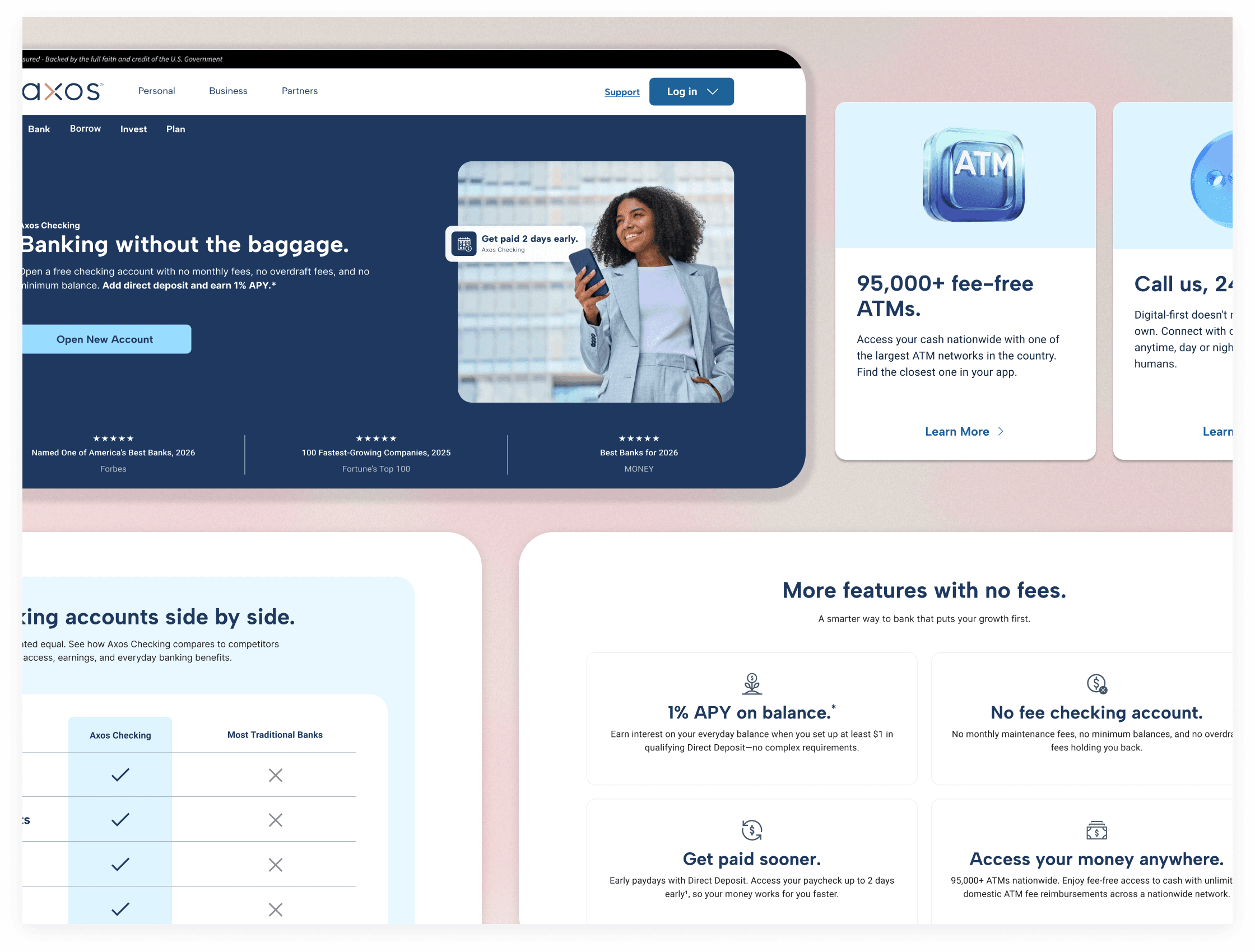
It started with web enrollment. I mapped the full path from site visit through application submit, wrote the copy myself, and rebuilt it around the tested value prop hierarchy, fees and simplicity up top, APY as the payoff once someone commits to direct deposit, instead of leading with rate the way most competitors do.
Building the ecosystem
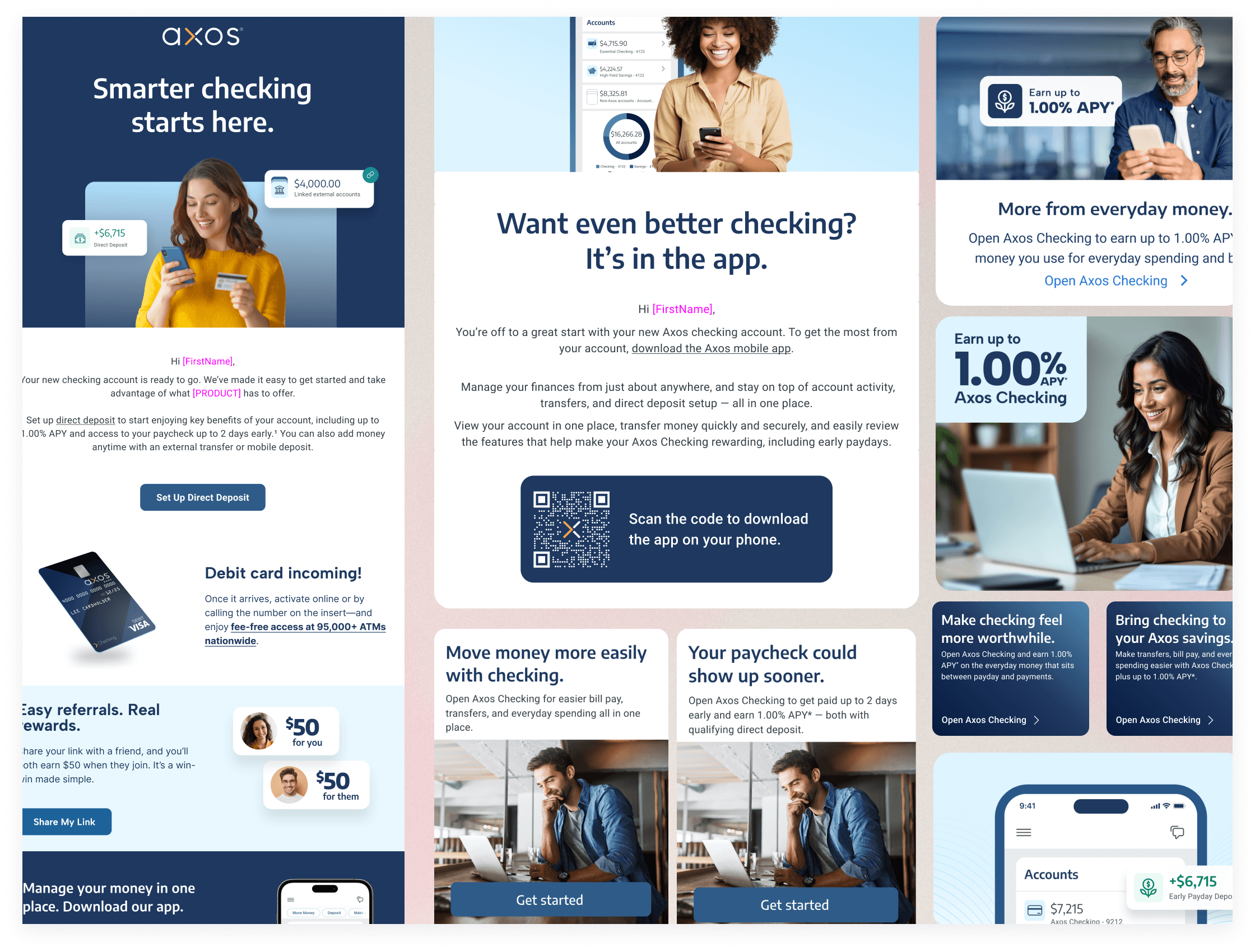
But getting someone to submit wasn't the finish line, plenty of people started an application and never finished funding it. So I built lifecycle email journeys underneath the web flow specifically to catch that drop-off, wrote the nudges and reminders, and carried someone from "signed up" through to actually funded, rather than assuming submission meant the job was done.
The last piece extended the same thinking to a different audience. Mobile app placements put the account in front of existing Axos customers inside sessions they were already in, so the same funnel logic, catch people where they are, give them the next reason to act, worked for cross-sell as well as new acquisition.
Results
Demand showed up from both directions.
The stats
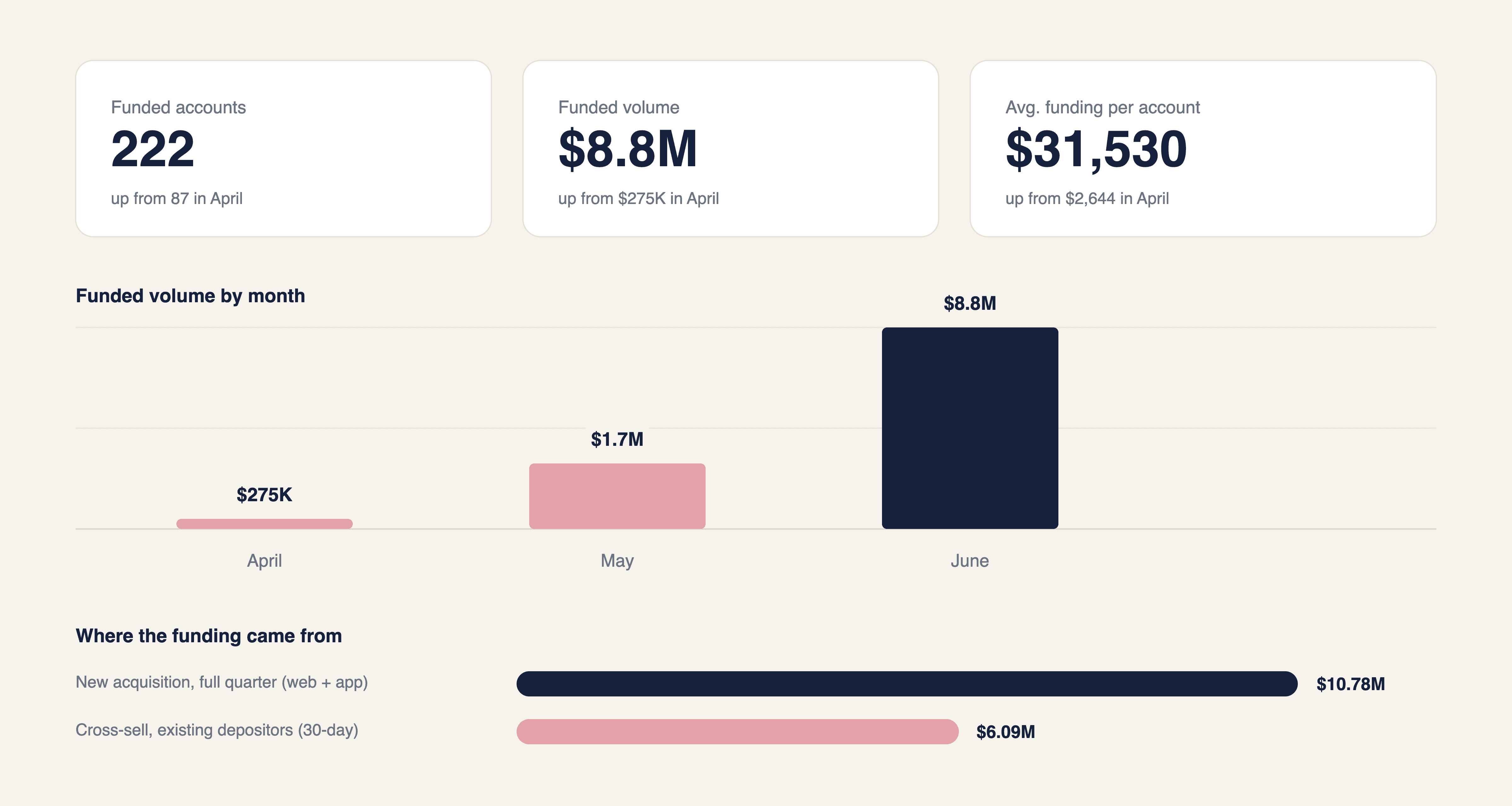
Applications went from 608 to 1,161 to 2,698 over the launch quarter. Funded accounts grew every month, 87, then 206, then 222. Total funded volume scaled from $275K to $1.7M to $8.8M, and the average funding per account jumped from $2,644 to $31,530. All of it came from the web and app journeys, no paid acquisition behind it (as we were in a testing period at the time)
The cross-sell push to existing depositors, an audience with over $2B already parked in savings, brought in $6.09M in Checking funding in the first 30 days. That's the part I actually care about most: it wasn't just new customers finding the product, existing customers wanted it too.
The narrative
The bigger takeaway was about sequencing. New-customer demand and existing-customer demand didn't move the same way or on the same timeline, the cross-sell audience converted faster since trust was already established, while new applicants needed more of the fees-first messaging to get there. That's shaped how I'd think about launch sequencing going forward: existing customers aren't just a nice-to-have segment, they're often the fastest proof a product works before you've earned trust with anyone new.
What's Next
Closing the gap now that demand is proven.
Approve-to-fund is still climbing in the funnel, 45.5% to 46.6%, and that's part of a bigger picture, not just a funnel metric to tighten. Now that demand is proven on both new and existing customers with zero paid spend behind it, the next question is what happens when we add paid channels and affiliates into the mix, and whether Checking can work as the entry point for those channels too, not just organic and app placements. I'm also working with the brand team to test CTV, seeing if Checking can act as a gateway product at the top of the funnel, the first account someone opens with Axos before they explore savings, lending, or investing. If organic can do this well, the next test is whether paid can scale it without losing the "easy first yes" positioning that made it work in the first place.


